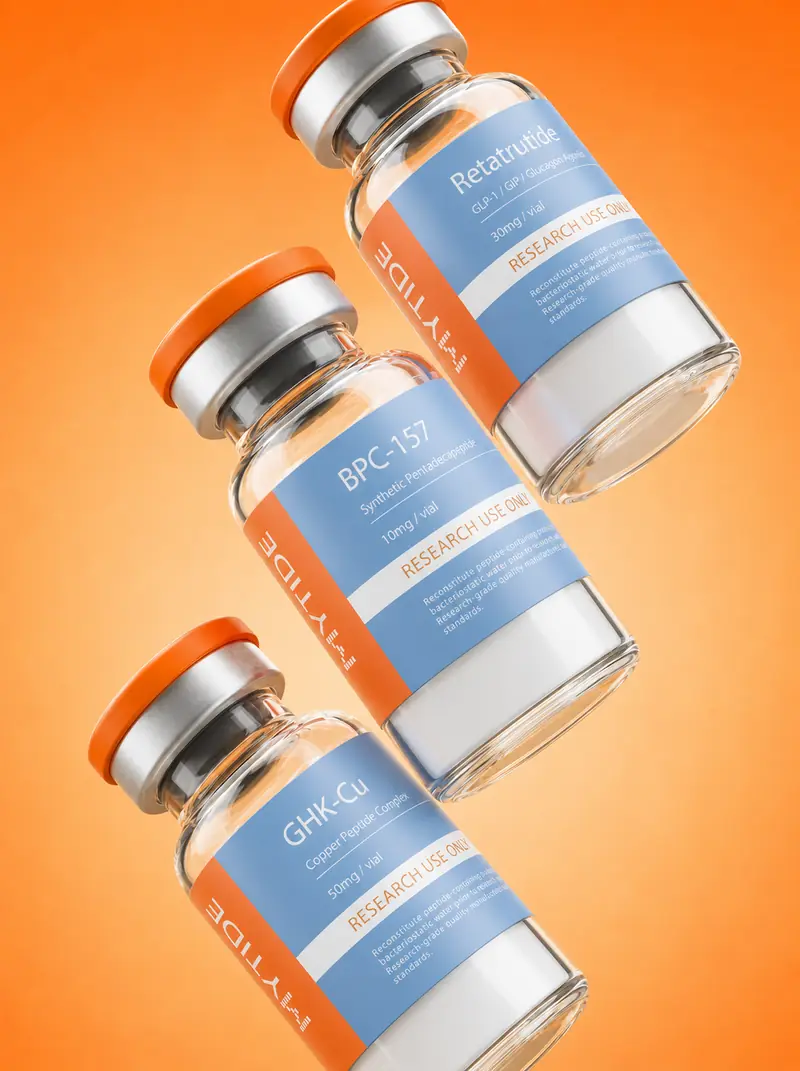
The peptide research landscape in 2026 is active, but broad “best peptide” searches are easy to misread. This guide is for research-use-only sourcing and documentation review, not treatment advice, dosing guidance, or health outcome claims.
If you are comparing peptides for a lab workflow, start with the commercial and trust pages first: browse the research peptide catalog, verify batch documents in lab reports, and use the COA interpretation guide before evaluating any individual compound page.
Below is a documentation-first look at major peptide research topics, with routes to active product pages where Mytide currently supports commercial sourcing.
1. BPC-157 - The Tissue Repair Workhorse
What it is: A 15-amino acid synthetic peptide derived from a protein found in human gastric juice (Body Protection Compound).
Why it's trending: BPC-157 has become one of the most broadly discussed peptides in preclinical tissue and barrier-function research. For sourcing decisions, prioritize the BPC-157 product page, lab reports, and COA checks over duplicate comparison articles.
Key research areas in 2026:
- Tendon and ligament healing - the most established area, with numerous animal studies showing accelerated repair
- Gut protection - ongoing research into inflammatory bowel conditions and gut barrier integrity
- Neuroprotection - newer studies exploring its interaction with the dopaminergic system
- Muscle-tendon junction repair - a growing area of interest for sports medicine researchers
What makes it special: Unlike most peptides, BPC-157 is remarkably stable in acidic environments. It survives stomach acid, which is unusual and opens up oral administration as a research route.
Learn more: BPC-157 Complete Research Guide | BPC-157 vs TB-500: Key Differences
2. TB-500 (Thymosin Beta-4 Fragment) - The Cell Migration Specialist
What it is: A synthetic version of the active region of Thymosin Beta-4, a 43-amino acid peptide found in virtually all human and animal cells.
Why it's trending: TB-500 is widely discussed in cell-migration and tissue-model research. For procurement review, compare the TB-500 product page, Wolverine Blend, and available lab reports rather than relying on broad claims.
Key research areas in 2026:
- Cardiac repair post-injury - one of the most exciting frontiers, with studies showing improved outcomes in animal models of heart damage
- Wound healing - extensive evidence for accelerated closure in various wound models
- Hair follicle regeneration - Thymosin Beta-4 has documented effects on hair follicle stem cells
- Anti-fibrotic applications - reducing scar tissue formation in various organs
What makes it special: TB-500 works systemically rather than locally, meaning it can influence repair processes throughout the body simultaneously.
3. GHK-Cu - The Copper Peptide Powerhouse
What it is: A naturally occurring tripeptide (Glycyl-L-Histidyl-L-Lysine) bound to a copper ion. Found in human blood plasma, saliva, and urine.
Why it's trending: GHK-Cu sits at the intersection of copper-peptide, matrix-remodeling, and cosmetic research models. For sourcing review, use the GHK-Cu product page, GLOW Blend, and COA documentation as the canonical commercial routes.
Key research areas in 2026:
- Skin remodeling - promotes collagen synthesis, elastin production, and glycosaminoglycan formation
- Wound healing - attracts immune cells and promotes angiogenesis at wound sites
- Anti-aging - broad gene expression studies show it upregulates repair genes and downregulates inflammatory genes
- Hair growth - studies suggest it may enlarge hair follicles and extend the growth phase
- Lung tissue repair - emerging research on respiratory tissue remodeling
What makes it special: GHK-Cu has been shown to modulate the expression of over 4,000 human genes - resetting many gene expression patterns to a healthier, younger state. This wide-ranging mechanism makes it fascinating for systems biology researchers.
For a comprehensive breakdown of mechanisms, published studies, and reconstitution protocols, see our GHK-Cu complete research guide.
4. GLP-1 Analog Research - Semaglutide, Tirzepatide, and Retatrutide
What it is: A glucagon-like peptide-1 (GLP-1) receptor agonist. Originally developed for type 2 diabetes, it's now one of the most prescribed peptide-based medications globally.
Why it's trending: GLP-1 analog topics attract heavy search demand, but they are also cannibalization-prone. Use the existing Semaglutide research guide for background, then route commercial review to active canonical pages such as Tirzepatide, Retatrutide, and lab reports.
Key research areas in 2026:
- Metabolic research - the primary domain, with robust data on glucose regulation and body composition
- Cardiovascular protection - emerging evidence of cardioprotective effects independent of weight changes
- Neurodegenerative disease - early-stage research exploring potential neuroprotective effects
- Addiction research - intriguing preclinical data suggesting GLP-1 agonists may influence reward pathways
- NASH/liver disease - studies on non-alcoholic fatty liver disease showing promising results
What makes it special: Semaglutide's long half-life (about 7 days) makes it unique among peptides, most of which are cleared from the body in minutes to hours. This is due to engineering modifications including fatty acid acylation and amino acid substitutions.
5. PT-141 (Bremelanotide) - The Melanocortin Activator
What it is: A synthetic peptide analog of alpha-melanocyte-stimulating hormone (α-MSH) that activates melanocortin receptors, particularly MC3R and MC4R. Derived from Melanotan II research.
Why it's trending: PT-141 is a melanocortin-system research tool with a distinct receptor profile. For sourcing review, start with the PT-141 product page and confirm documentation through lab reports.
Key research areas in 2026:
- Sexual dysfunction - the established clinical application, acting through CNS pathways rather than vascular mechanisms
- Melanocortin system research - PT-141 is a valuable tool for understanding the melanocortin receptor system
- Appetite regulation - MC4R is involved in energy balance, creating crossover with metabolic research
- Inflammatory modulation - melanocortin peptides have documented anti-inflammatory properties
What makes it special: Unlike most peptides that work peripherally, PT-141 crosses into the central nervous system and activates brain-based pathways. This makes it a valuable research tool for neuroscience applications. Read our full breakdown: PT-141 (Bremelanotide): The Complete Research Guide.
6. KPV - The Anti-Inflammatory Tripeptide
What it is: A tripeptide (Lysine-Proline-Valine) derived from the C-terminal end of alpha-melanocyte-stimulating hormone (α-MSH). Read our complete KPV research guide for a deep dive.
Why it's trending: KPV is gaining attention as a potent anti-inflammatory peptide with a remarkably simple structure. Its small size (just three amino acids) makes it easy to synthesize, stable, and potentially suitable for various delivery methods.
Key research areas in 2026:
- Inflammatory bowel disease - studies showing reduced inflammation markers in gut tissue models
- Skin inflammation - research on inflammatory skin conditions and wound healing
- Antimicrobial activity - KPV has demonstrated direct antimicrobial properties in some studies
- Mucosal immunity - exploring effects on gut mucosal barrier function
- Oral delivery research - its small size and stability make it a candidate for oral peptide delivery studies
What makes it special: Despite being just three amino acids long, KPV retains the anti-inflammatory activity of its much larger parent molecule (α-MSH, which is 13 amino acids). It primarily works by inhibiting NF-κB activation - a master switch in inflammatory signaling.
7. Thymosin Alpha-1 - The Immune Modulator
What it is: A 28-amino acid peptide naturally produced by the thymus gland. It plays a central role in immune system maturation and regulation.
Why it's trending: In a post-pandemic world, immune modulation research has never been more relevant. Thymosin Alpha-1 (Tα1) is approved in over 35 countries for various immune-related conditions, and research continues to expand.
Key research areas in 2026:
- Immune deficiency - enhances T-cell maturation and function
- Viral infection research - extensive study in hepatitis B and C, with growing interest in broader antiviral applications
- Cancer immunology - used as an adjunct in some oncology research protocols to boost immune response
- Vaccine response enhancement - research into improving vaccine efficacy in immunocompromised populations
- Sepsis - emerging evidence for benefit in critical care immune dysfunction
What makes it special: Unlike immunosuppressants, Thymosin Alpha-1 is an immune modulator - it enhances the immune response when it's underactive without triggering overactivation. This bidirectional regulation makes it uniquely interesting.
8. Follistatin 344 - The Myostatin Inhibitor
What it is: A naturally occurring glycoprotein that binds and neutralizes myostatin - the body's primary brake on muscle growth.
Why researchers care: Follistatin doesn't add a stimulus; it removes an inhibitor. By sequestering myostatin and activin, it fundamentally shifts the balance between muscle growth and breakdown. Clinical trials in muscular dystrophy patients have shown real functional improvements.
Key research areas: Muscle wasting conditions (sarcopenia, cachexia, muscular dystrophy), metabolic regulation, brown fat activation, and fertility research.
What makes it special: Decades of peer-reviewed research, successful Phase 1/2a clinical trials, and a mechanism validated from gene therapy down to molecular signaling. One of the most evidence-backed peptides for muscle biology research.
Trends Shaping Peptide Research in 2026
Beyond individual compounds, several broader trends are driving the field forward:
Combination Protocols
Researchers are increasingly studying peptides in combination rather than isolation. The BPC-157 + TB-500 combination is perhaps the most discussed, but growth hormone secretagogue stacks like CJC-1295 paired with Ipamorelin are gaining serious traction as well. Peptides like MGF (Mechano Growth Factor) are gaining attention for muscle repair, while nootropic peptides like Selank are being studied alongside cognitive-focused compounds like Semax.
Oral Delivery Advances
Traditionally, most peptides required injection due to degradation in the digestive system. New delivery technologies - including nanoparticle encapsulation and permeation enhancers - are making oral peptide delivery more viable.
AI-Driven Peptide Discovery
Machine learning models are now being used to predict peptide properties, optimize sequences, and identify novel candidates. This is dramatically accelerating the pace of discovery.
Increased Quality Standards
As the peptide research market grows, verifiable quality matters more than another informational article. Third-party testing, detailed COAs, and transparent sourcing should be reviewed before any product decision. Start with Mytide lab reports, then read how to read a COA and compare active catalog pages such as BPC-157, TB-500, GHK-Cu, PT-141, Tirzepatide, Retatrutide, Ipamorelin, Tesamorelin, and Sermorelin.
Getting Started with Peptide Research
If you're new to peptide research or expanding your current work, here are some practical resources:
- Research peptide catalog - active commercial product routes for research-use-only sourcing
- Lab reports - batch documentation and COA routing for active products
- How to Read a COA - interpret purity, mass, and identity checks
- How to Reconstitute Peptides - preparation concepts for research workflows
- Peptide Storage Guide - stability and handling context for lab materials
- MK-677 Complete Guide - the oral GH secretagogue for growth hormone research
- AOD-9604 Complete Guide - the HGH fragment for fat metabolism research
- Selank Complete Guide - nootropic and anxiolytic peptide research
- MGF Complete Guide - muscle repair and growth factor research
- DSIP Complete Guide - sleep architecture and neuroendocrine research
- MOTS-c Complete Guide - mitochondrial-derived exercise mimetic peptide research
- Where to Buy MOTS-c Guide - purity standards and vendor evaluation for mitochondrial peptides
For active, crawlable commercial routes, use Mytide Lab products and lab reports as the canonical sourcing path. Some compounds discussed above are background research topics only and may not have an active product page.
The peptide research field is moving fast, but the safest SEO route is not more duplicate blog churn. Use this hub to move from broad research interest into product pages, COA documentation, and research-use-only procurement checks.